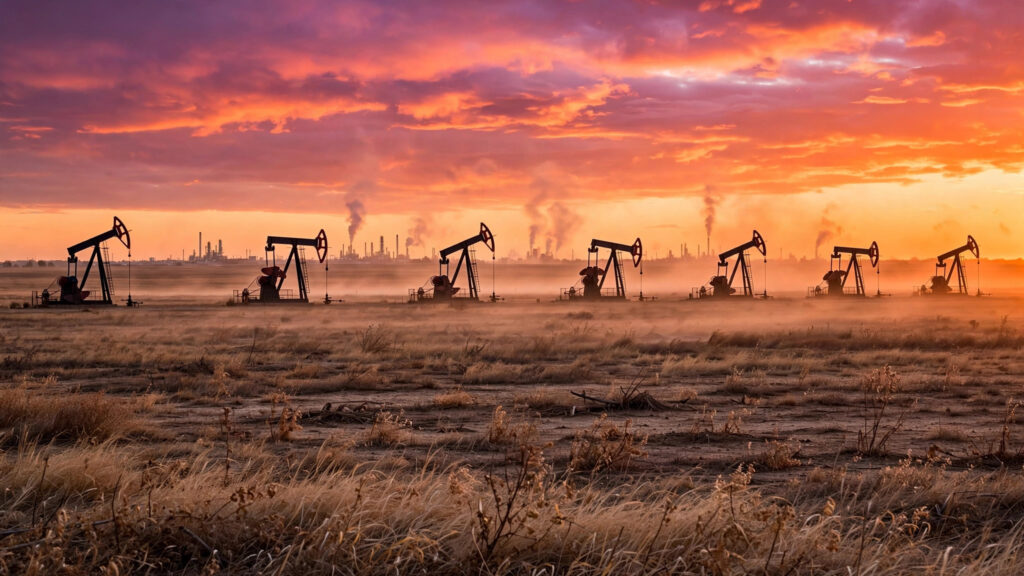
Few prices matter as much to the American economy as the price of a barrel of oil. It shows up at the gas pump within days, in airline tickets and shipping bills within weeks, and in the inflation statistics that move the Federal Reserve within months. Oil shocks have triggered or deepened several US recessions, and oil politics shape foreign policy. Yet the relationship has grown more complicated: thanks to the shale revolution, America is now one of the world’s largest oil producers, which means rising crude prices simultaneously hurt consumers and help domestic drillers. Here is how those ripples travel through the economy in 2026.
Table of Contents
- Channel One: The Gas Pump and Household Budgets
- Channel Two: Transport, Freight, and Everything Shipped
- Channel Three: Inflation and the Fed’s Response
- The Shale Twist: America as Producer and Consumer
- Beyond Fuel: Petrochemicals, Plastics, and Food
- The Oil Outlook for 2026
- Key Takeaways
Channel One: The Gas Pump and Household Budgets
The most visible ripple is also the fastest: gasoline prices. Crude oil accounts for roughly half the retail price of gasoline, with refining, distribution, marketing, and taxes making up the rest. When crude jumps, pump prices typically follow within days to weeks — and they fall more slowly on the way down, the famous “rockets and feathers” pattern that frustrates drivers.
Gasoline matters disproportionately because demand for it is inelastic in the short run: commuters still have to get to work. A sustained increase functions like a regressive tax, hitting lower-income households hardest since fuel takes a larger share of their budgets. Economists estimate that a lasting $10-per-barrel rise in crude shaves a meaningful fraction off consumer spending power — money that would otherwise flow to restaurants, retail, and services.
Gas prices also punch above their weight psychologically. Surveys consistently show that consumers’ perceptions of inflation track pump prices closely, even though gasoline is a modest share of total spending. When drivers see $4-plus per gallon, they feel poorer and report gloomier economic expectations — a sentiment effect that can dampen spending beyond the direct budget hit. Our consumer confidence explainer digs into how perceptions shape behavior.
Channel Two: Transport, Freight, and Everything Shipped
Oil is the lifeblood of freight. Diesel powers the trucks that move the majority of US goods by value; jet fuel is airlines’ largest operating cost after labor; bunker fuel moves container ships. When crude rises, freight rates follow, and those costs embed themselves in the price of nearly every physical product — the supply-chain channel examined in our supply chains and inflation guide.
Airlines illustrate the pass-through vividly: fuel surcharges appear on tickets, marginal routes get cut, and older, thirstier aircraft get parked. Trucking companies impose fuel surcharges that cascade to shippers and ultimately consumers. Unlike gasoline, these business-to-business cost increases arrive with a lag of weeks to months, which is why an oil shock’s full inflationary impact unfolds gradually.
Public transit systems, school districts, and municipal fleets feel it too, often translating fuel costs into fare hikes or service cuts that hit working families. Energy costs are also a major input for agriculture — diesel for tractors, natural gas for fertilizer — linking oil prices to the grocery bills explored in our economics of rising grocery prices.
Channel Three: Inflation and the Fed’s Response
Energy carries a meaningful weight in the Consumer Price Index, so oil spikes show up directly in headline inflation — the measure most Americans encounter in news reports. This creates the Fed’s classic dilemma: an oil-driven inflation surge is a supply shock, and raising interest rates cannot pump more oil. But the Fed must still prevent the shock from becoming entrenched in expectations and wage demands.
History shows how costly misjudgment can be. The 1970s oil shocks, accommodated by loose policy, helped produce stagflation; the Volcker Fed’s brutal tightening that followed crushed inflation at the cost of a deep recession. Modern central banks try to “look through” temporary energy spikes while standing ready to act if core inflation — which strips out volatile food and energy — starts rising. See our core vs. headline inflation guide for why that distinction matters.
The Fed’s challenge in 2026 is judging persistence: a brief geopolitical spike that fades needs no policy response, but a sustained elevation driven by underinvestment or structural demand shifts might. Markets parse every Fed statement for clues about which interpretation officials favor.
The Shale Twist: America as Producer and Consumer
The shale revolution transformed America’s oil arithmetic. The US is now roughly self-sufficient in petroleum on a net basis and ranks among the world’s top producers, thanks to hydraulic fracturing and horizontal drilling in the Permian Basin and other plays. This means high oil prices are no longer an unambiguous national loss: they transfer wealth from consumers to domestic producers, supporting drilling jobs, royalty income, and investment in energy states like Texas, North Dakota, and New Mexico.
But the offset is partial and uneven. The consumer pain is spread across all 50 states immediately; the producer gains concentrate in a handful of regions and take time to materialize through investment cycles. Moreover, shale firms in recent years have prioritized shareholder returns over production growth, making US supply less responsive to price signals than in the boom years — a shift with global implications, since the world can no longer count on American shale to quickly fill every supply gap.
Refining geography adds another wrinkle: the US exports crude but imports certain grades its refineries are configured to process, so even “energy independence” does not insulate pump prices from global markets. Gasoline prices still dance to the tune of Brent and WTI benchmarks set by world supply and demand. The Energy Information Administration’s weekly data, published by the US Energy Information Administration, is the authoritative source for tracking these flows.
Beyond Fuel: Petrochemicals, Plastics, and Food
Oil’s reach extends well past the pump. Petrochemicals derived from oil and natural gas are the feedstock for plastics, synthetic fabrics, cosmetics, pharmaceuticals, and countless industrial materials. When crude rises, so do input costs for manufacturers across the economy — from car parts to packaging to medical supplies.
Agriculture ties oil to food through multiple strands: diesel for farm equipment, natural gas for nitrogen fertilizer, and transportation at every stage from field to store. Researchers have documented significant pass-through from energy to food prices, with lags stretching over quarters. This is one reason grocery inflation often trails gasoline inflation — and why it fades more slowly.
Even services are not immune: energy costs flow into rents (through heating and operating costs for commercial buildings) and into the vast logistics networks behind e-commerce. In a modern economy, there is almost no price entirely untouched by oil.
The Oil Outlook for 2026
Oil markets in 2026 balance competing forces. On the supply side: OPEC+ production decisions, the pace of US shale output, sanctions regimes, and the long-term drag of underinvestment in new production during the energy transition. On the demand side: global growth rates, China’s economic trajectory, the accelerating adoption of electric vehicles (which gradually erodes gasoline demand), and petrochemical demand growth in developing economies.
Geopolitical risk remains the wild card — Middle East tensions, shipping-lane disruptions, and the strategic use of energy exports can spike prices with little warning, as markets price in worst-case scenarios long before any physical shortage materializes. The Strategic Petroleum Reserve gives Washington a limited buffer, but releases are a temporary salve, not a supply strategy.
For households and businesses, the prudent stance is the same as ever: energy price volatility is a permanent feature of the economy. Efficiency investments, from insulation to fuel-efficient fleets, pay dividends regardless of which way prices swing — and the USA.gov energy resources portal points consumers toward available efficiency programs.