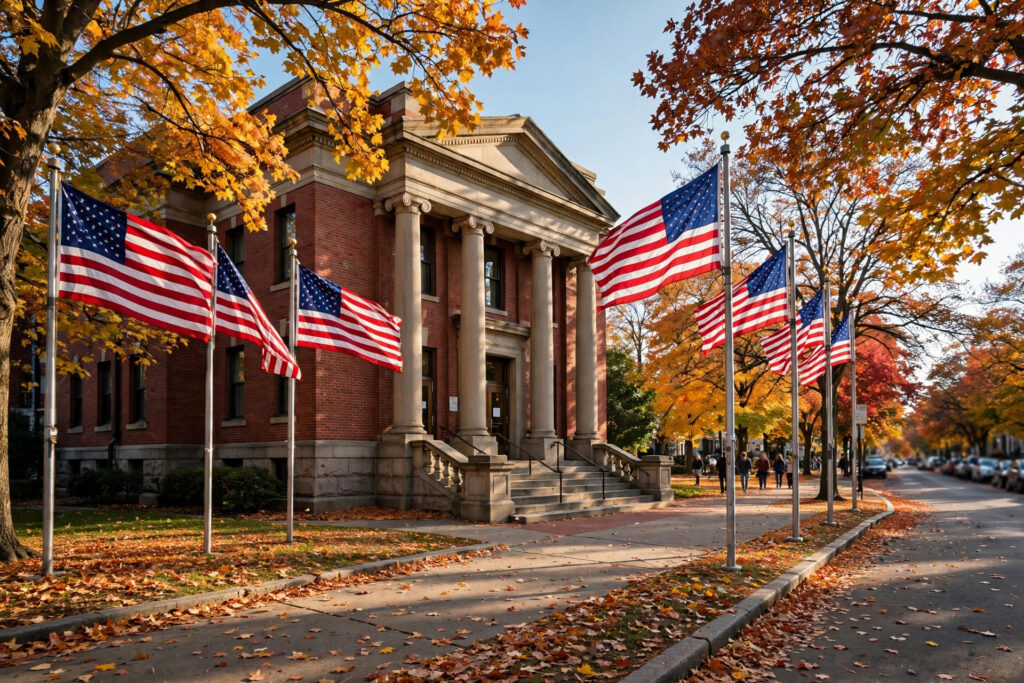
Every four years, Americans elect a president. But the elections held halfway through a presidential term, the midterms, often matter just as much for the direction of the country. The midterm elections 2026, scheduled for November 3, 2026, will determine which party controls the House of Representatives and the Senate, decide dozens of governors’ races, and put thousands of state and local offices on the ballot. For voters, they are the most direct check on presidential power between presidential elections. This guide explains what is at stake, how midterms work, and why turnout in these races shapes American life for years.
Table of Contents
- What Midterm Elections Are
- What Is on the Ballot in 2026
- Why Midterms Matter So Much
- The President’s Party Problem: History’s Lesson
- How to Participate: Registration and Voting
- Key Takeaways
What Midterm Elections Are
Midterm elections are the general elections held in the middle of a president’s four-year term, two years after one presidential election and two years before the next. The name is literal: they fall at the midpoint. Unlike presidential years, no one is running for the White House, which is why midterms historically draw lower turnout, though participation has been climbing in recent cycles.
The federal offices on the ballot are substantial. All 435 seats in the House of Representatives are contested every two years, so the entire House is up for grabs in every midterm. In the Senate, roughly one-third of the 100 seats are contested each cycle; in 2026, it is the turn of the Class 2 senators, those elected in 2020, along with any special elections to fill vacancies. Beyond Congress, 36 states elect governors in 2026, plus countless state legislators, attorneys general, secretaries of state, judges, mayors, and ballot measures.
Because House terms last only two years, representatives are perpetually campaigning, and midterms are their report card. Senators serve six-year terms, so each midterm tests only a slice of the chamber, but that slice can flip control. The combination makes midterms a national referendum conducted through hundreds of local races.
What Is on the Ballot in 2026
Control of Congress is the headline prize. If one party holds the House, Senate, and presidency, it can advance its agenda with few obstacles; divided government forces negotiation, and sometimes gridlock. In 2026, every House seat is in play, and the Senate map will determine whether the chamber stays in friendly hands for the president or becomes a check on the administration. Analysts watch a short list of competitive states and districts, but wave elections have a way of reaching beyond the expected battlegrounds.
Governors’ races deserve more attention than they usually get. Governors sign or veto state legislation, manage state budgets, oversee election administration in many states, and appoint officials who shape daily life. With 36 governorships on the ballot, 2026 will reshape state government across most of the country. State legislatures matter enormously too: they draw congressional district lines in most states, set voting rules, and decide policy on everything from education funding to abortion access. Voters focused only on Washington miss where much of American governance actually happens, a theme explored in coverage of how state and federal power interact.
Finally, ballot measures let voters decide policy directly. Depending on the state, 2026 ballots may include initiatives on taxes, minimum wage, redistricting, and other issues. These measures often draw voters who might otherwise skip a midterm, and their results can reshape state law overnight.
Why Midterms Matter So Much
The single biggest reason midterms matter is congressional control. The party that holds the House decides which bills reach the floor, which investigations proceed, and how aggressively the executive branch is overseen. The party that holds the Senate decides the fate of judicial nominations, cabinet appointments, and treaties. A midterm that flips either chamber transforms the second half of a presidency from an era of action to an era of negotiation, or stalemate.
Midterms also set the table for the next presidential race. Strong performances build party benches, elevate future presidential contenders, and generate momentum and donor confidence. Weak performances trigger recriminations, leadership challenges, and strategic rethinks. Both parties treat midterm results as the most reliable early signal of where the country is heading.
For ordinary citizens, the practical stakes are concrete: economic policy, health care funding, education standards, and immigration enforcement all hinge on who holds the levers. Midterm voters are effectively hiring the managers of federal policy for the next two years, and the effects compound over time through judicial appointments and long-term legislation.
The President’s Party Problem: History’s Lesson
History delivers a blunt warning to whichever party holds the White House: the president’s party almost always loses seats in midterms. Since World War II, the president’s party has lost House seats in nearly every midterm election, sometimes by a little, sometimes in a wave. The pattern reflects a mix of forces: energized opposition voters, complacent supporters, the natural difficulty of governing, and the tendency of voters to use midterms to register dissatisfaction.
There are exceptions, and they are instructive. When the country rallies around a president during a crisis, or when the economy is roaring and the opposition is divided, the losses can be minimal or even reversed. But strategists in both parties plan around the historical headwind, which is why presidents push their most ambitious legislation early, before the midterm clock runs out.
The lesson for voters is not to treat history as destiny but as context. Turnout is the variable that breaks patterns: when a party’s supporters show up at presidential-year levels in a midterm, the historical curse weakens. Every recent cycle has shown that motivated coalitions can defy expectations, which makes participation itself the decisive factor.
How to Participate: Registration and Voting
Voting in the midterms starts with registration, and the rules vary by state. Most states allow online registration, and many offer same-day registration at the polls, while others set deadlines weeks before Election Day. Checking your registration status early is the single most useful step: records go stale when people move, change names, or simply have not voted in a while. USA.gov provides state-by-state registration links and deadline information in one place.
Beyond registration, learn your options. Most states now offer some form of early in-person voting or no-excuse absentee or mail voting, though the details differ widely. Researching down-ballot races and ballot measures takes more effort than picking a presidential candidate, but nonpartisan voter guides and sample ballots, available from state and county election offices, make it manageable.
Finally, remember that the census and redistricting shape the districts you vote in: population data from the decennial count determines congressional maps for the decade, as explained in reporting on the census and representation. Knowing your district, your representatives, and what is on your specific ballot turns a midterm from background noise into an exercise of real power.