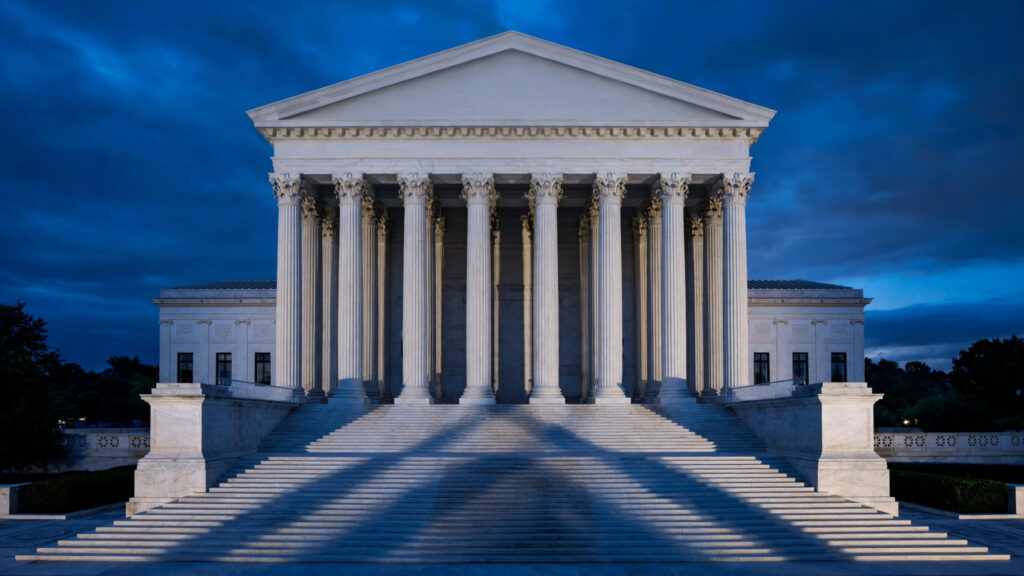
A Supreme Court appointment is one of the most consequential decisions in American government. Justices serve for life, and their rulings shape everything from voting rights to business regulation for generations. Yet the process that puts them on the bench, from presidential nomination to Senate confirmation, is often a blur of hearings, headlines, and political theater. This guide walks through each step of a supreme court nomination so you know exactly what happens, who decides, and where the process can break down.
Table of Contents
- Step 1: A Vacancy Opens and a Shortlist Forms
- Step 2: The President Makes the Nomination
- Step 3: Senate Judiciary Committee Hearings
- Step 4: The Full Senate Vote
- When Confirmations Turn Contentious
- Key Takeaways
Step 1: A Vacancy Opens and a Shortlist Forms
Everything begins with an empty seat. Supreme Court vacancies arise when a justice retires, dies, or, in extraordinarily rare cases, is removed through impeachment. Because justices hold their seats “during good Behaviour,” effectively for life, vacancies are unpredictable events, and each one triggers an intense political scramble. Presidents and their advisers typically maintain running lists of potential nominees long before a vacancy occurs, especially late in a justice’s tenure when retirement rumors circulate.
The White House vets candidates thoroughly. Teams of lawyers examine judicial opinions, speeches, academic writings, financial disclosures, and personal background. The American Bar Association also rates nominees’ professional qualifications, a tradition dating back decades. Interest groups on both sides mobilize immediately: supporters prepare advocacy campaigns while opponents dig for controversial rulings or statements. By the time a name is announced, both parties have usually war-gamed the fight to come.
The political calendar matters enormously. A vacancy in a presidential election year, or when the Senate majority belongs to the opposing party, transforms the process. The Senate’s willingness to act, or to refuse to act, can matter as much as the nominee’s qualifications, a reality that has shaped several recent confirmation battles.
Step 2: The President Makes the Nomination
Under the Constitution’s Appointments Clause, the president “shall nominate, and by and with the Advice and Consent of the Senate, shall appoint” Supreme Court justices. The nomination is the president’s alone to make; the Senate cannot propose its own candidate. Presidents typically announce their pick in a high-profile White House ceremony, framing the choice in terms of judicial philosophy, professional excellence, and the nominee’s life story.
Modern presidents select nominees with an eye toward both ideology and confirmability. A brilliant jurist with a paper trail of controversial opinions may excite the base but complicate Senate math; a less provocative record may ease confirmation but disappoint supporters. Age is another open consideration: because the appointment is for life, younger nominees can influence the law for decades, which is why recent nominees have often been in their late 40s or early 50s.
Once announced, the nomination is formally transmitted to the Senate, where it is referred to the Judiciary Committee. The White House then begins the delicate work of shepherding the nominee through courtesy visits with senators, known as the “courtesy call” circuit, while allied groups run public campaigns. For context on how presidential choices interact with the broader balance of power in Washington, the nomination stage is where executive influence is at its peak.
Step 3: Senate Judiciary Committee Hearings
The Judiciary Committee stage is the most visible part of the process. The committee investigates the nominee’s background, holds public confirmation hearings, and then votes on whether to recommend the nominee to the full Senate. Hearings typically run several days: an opening day of statements, days of questioning by senators, testimony from outside witnesses, and a closed session if sensitive matters arise.
The questioning follows familiar rituals. Senators probe the nominee’s judicial philosophy, views on precedent, and approach to interpreting the Constitution, while nominees carefully avoid prejudging cases that might come before the Court, a practice sometimes called the “Ginsburg rule” after Justice Ruth Bader Ginsburg’s 1993 hearings. Nominees also face questions about past rulings, writings, and any controversies uncovered during vetting. The most dramatic modern confirmations have turned on these exchanges, which play out live before a national audience.
After hearings conclude, the committee votes. A favorable recommendation sends the nomination to the Senate floor; an unfavorable one does not necessarily kill it, since the full Senate can still consider the nomination. Either way, the committee’s report, with its record of testimony and views, becomes the official dossier the whole Senate uses. You can find committee schedules, hearing transcripts, and vote records on Congress.gov.
Step 4: The Full Senate Vote
On the Senate floor, the majority leader schedules debate and a final confirmation vote. Here is where modern rule changes matter most: since 2017, Supreme Court nominations, like other nominations, need only a simple majority to advance and to be confirmed. The legislative filibuster’s 60-vote threshold does not apply. In practice, this means a unified Senate majority can confirm a justice over unanimous opposition, which is why recent confirmations have often broken along party lines.
The vote itself is a roll call, and each senator’s decision is recorded for history. If confirmed, the nominee receives a commission signed by the president, takes the constitutional and judicial oaths, and joins the Court, usually at the start of the next term or immediately if the Court is in session. The entire journey from nomination to swearing-in has ranged from a few weeks to many months; some nominations have languished without any vote at all.
What happens to nominees who fail? Some withdraw under pressure, some are voted down, and some never receive a hearing. A failed supreme court nomination is a significant political event: it consumes months of capital, energizes the opposition, and often shapes the next vacancy fight. The economics of that political capital, who spends it and to what end, is part of the broader story of how Washington allocates scarce political resources.
When Confirmations Turn Contentious
Not every confirmation is a battle, but the contentious ones reveal how the process really works under stress. Timing fights are the most common flashpoint: should a vacancy be filled in an election year, or left for the voters to decide indirectly? The Senate’s answer has varied with partisan advantage, and each precedent becomes ammunition for the next fight. Opponents may also slow the process through procedural delays, extensive document demands, and public pressure campaigns aimed at wavering senators.
Public opinion plays a larger role than the Founders likely imagined. Polling, media coverage, and organized advocacy can move senators, particularly those facing tough reelections. Interest groups on both sides treat Supreme Court fights as fundraising and mobilization engines, which raises the temperature further. For citizens, the practical takeaway is that confirmations are won as much in the court of public opinion as in the hearing room, and civic education about the process is the best defense against manipulation.
Despite the drama, the constitutional design endures: presidential nomination plus Senate confirmation, with lifetime tenure insulating justices from the politics that placed them there. Whether that insulation still works as intended is one of the liveliest debates in American law, and every new vacancy reopens it. For official explanations of the federal judiciary’s role, USA.gov provides a clear overview.