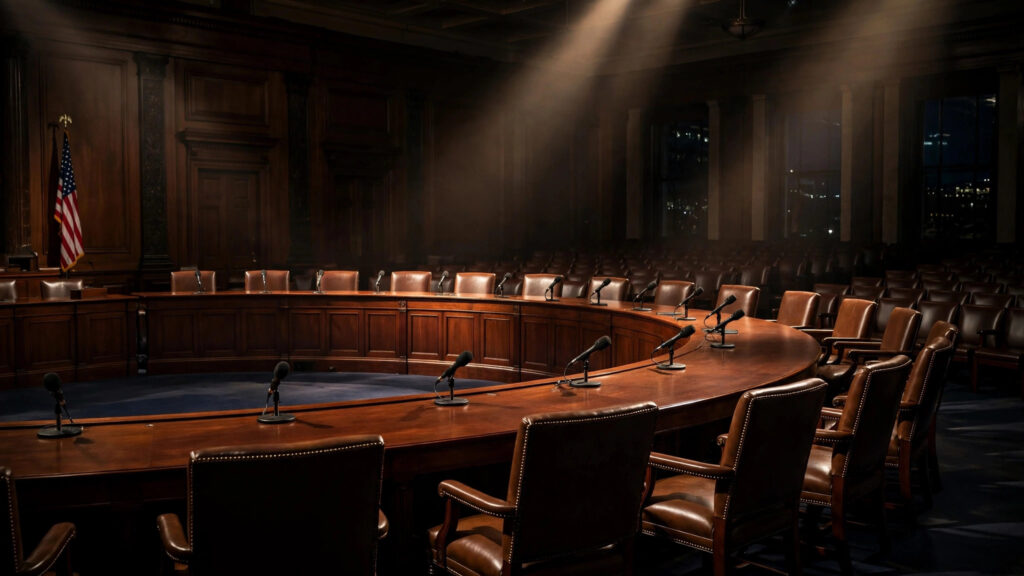
When Americans picture Congress at work, they often imagine dramatic floor votes in the House or Senate chambers. In reality, the fate of nearly every bill is decided long before any floor vote, in the committee rooms where legislation is drafted, debated, amended, and frequently buried. Congressional committees are the workshops of American lawmaking, and understanding them is understanding how Congress really works. This guide explains the committee system, the powers committees wield, and why a bill’s committee assignment can matter more than its merits.
Table of Contents
- What Congressional Committees Are
- Types of Committees: Standing, Select, Joint, and Conference
- How a Bill Moves Through Committee
- Hearings, Investigations, and Oversight Power
- Why Committees Are Where Power Lives
- Key Takeaways
What Congressional Committees Are
Congressional committees are small working groups of senators or representatives assigned to specific policy areas, such as finance, agriculture, foreign relations, or the judiciary. The House has about twenty standing committees and the Senate about sixteen, each divided into subcommittees that handle narrower topics. Committee seats are allocated to parties roughly in proportion to their chamber strength, with the majority party holding the chairmanship of every committee and a one-vote edge that guarantees control.
The division of labor is a practical necessity. No legislator can master every issue, from farm subsidies to nuclear weapons policy, so committees let members specialize. Over time, members build deep expertise and relationships with the agencies, industries, and interest groups in their committee’s jurisdiction. A representative who spends a decade on the Agriculture Committee becomes one of the country’s leading authorities on farm policy, which is precisely the point of the system.
Committee assignments are also political currency. Party leaders dole out coveted seats on powerful committees like Ways and Means, Appropriations, or Finance as rewards, and members lobby hard for assignments that matter to their districts or ambitions. A seat on the right committee can define a career, which is why assignment fights at the start of each Congress are taken so seriously.
Types of Committees: Standing, Select, Joint, and Conference
Standing committees are the permanent workhorses of Congress, established by chamber rules with defined jurisdictions and the power to report legislation to the floor. Nearly all bills are referred to a standing committee, and most die there. The Senate Finance Committee handles taxes and trade; the House Energy and Commerce Committee covers health care, energy, and consumer protection; the Armed Services committees in both chambers oversee the military. Each standing committee’s jurisdiction is jealously guarded territory.
Select (or special) committees are created for a specific purpose and often for a limited time. Famous examples include the Senate Watergate Committee and the House Select Committee on the January 6 attack. These committees typically cannot report legislation; their power lies in investigation and publicity. Joint committees include members of both chambers and handle housekeeping or study functions, such as the Joint Economic Committee. Conference committees are temporary bodies formed to reconcile House and Senate versions of a bill, and their compromise text, the conference report, usually becomes the final law.
The table below summarizes the landscape:
| Type | Permanence | Main Power |
|---|---|---|
| Standing committee | Permanent | Drafts, amends, and advances legislation |
| Select committee | Temporary | Investigates specific issues; usually no bills |
| Joint committee | Varies | Study, oversight, and administrative functions |
| Conference committee | Ad hoc | Reconciles House-Senate differences into final text |
Committee rosters, jurisdictions, and schedules are published on Congress.gov, where you can track exactly which committee holds any bill you care about.
How a Bill Moves Through Committee
A bill’s committee journey follows a well-worn path. After introduction, the parliamentarian refers it to the committee with jurisdiction over its subject. The chair then decides its fate: schedule hearings and a markup session, or let it languish. Most bills never get a hearing. The chair’s gatekeeping power is one of the most formidable in Washington, exercised quietly through the calendar rather than through votes.
If the bill advances, the committee holds hearings to gather testimony from experts, stakeholders, and administration officials, then moves to “markup,” the line-by-line session where members offer amendments and vote on changes. Markup is where legislation is truly written: a bill can enter committee as a vague proposal and emerge as detailed law, or be amended beyond recognition. The committee then votes on whether to report the bill favorably to the full chamber, often with a written report explaining its provisions.
This process is where lobbyists, agencies, and business interests concentrate their efforts, because shaping a bill in committee is far easier than changing it on the floor. The markup room, not the chamber floor, is where the fine print of American law is negotiated, a reality that makes committee membership one of the most consequential assignments in government.
Hearings, Investigations, and Oversight Power
Committees do more than legislate; they investigate. Congressional oversight, the power to monitor the executive branch, is exercised almost entirely through committees. They can subpoena witnesses and documents, hold public hearings that dominate the news cycle, and publish reports that reshape public debate. From Watergate to financial crisis inquiries to tech CEO testimonies, committee hearings are among the most visible moments in American political life.
Oversight serves several purposes at once: exposing wrongdoing, informing future legislation, checking executive overreach, and, frankly, generating political theater. The majority party sets the oversight agenda, which is why a change in House or Senate control produces an immediate change in which officials get hauled before which microphones. Effective oversight has forced resignations, ended programs, and rewritten regulations; performative oversight fills cable news hours. Both are exercises of real constitutional power.
For citizens, hearings are also a window into government. Most are open to the public and streamed online, and witness testimony becomes part of the permanent record. Following the committees with jurisdiction over issues you care about, whether health policy or financial regulation, is one of the most direct ways to watch your government work.
Why Committees Are Where Power Lives
The old saying that Congress in session is Congress on exhibition while Congress in committee is Congress at work captures an enduring truth. Committee chairs control agendas, shape bills, command staff resources, and dominate media coverage of their issue areas. The “markup” pen is mightier than the floor speech: by the time a bill reaches the floor, party leaders have usually counted the votes, and the outcome is preordained. The real decisions happened weeks earlier in a committee room.
This concentration of power has critics. They argue that committees give disproportionate influence to senior members, entrench industry relationships, and let chairs kill popular bills without a public vote. Defenders respond that specialization produces better legislation and that the alternative, 535 generalists voting on everything, would be chaos. Reforms over the decades have chipped at chairmen’s power, term-limiting chairs and opening markups to public view, but the committee system’s central role has never seriously been challenged.
For anyone trying to influence legislation, the lesson is practical: find the committee of jurisdiction, learn its members and schedule, and engage there. By the floor vote, it is usually too late. USA.gov offers a plain-language overview of the legislative process that pairs well with the committee-level detail above.