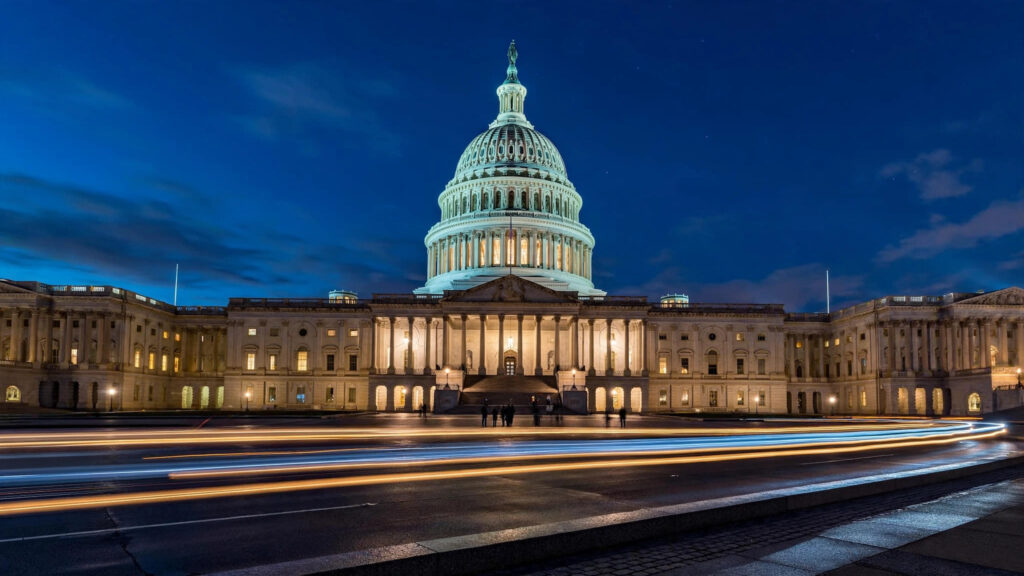
Every fall, Washington flirts with a government shutdown — and the tool that usually prevents one is the continuing resolution, or CR. A continuing resolution is a stopgap funding bill that keeps federal agencies operating when Congress has not finished its regular budget work on time. CRs have become the normal way the United States funds its government, for better or worse. Here is what a continuing resolution actually does, why lawmakers rely on them, and what is at stake when one runs out.
Table of Contents
- What a Continuing Resolution Is
- How a CR Works in Practice
- Why Congress Keeps Using CRs
- The Problems With Governing by CR
- CRs vs. Omnibus Bills vs. Shutdowns
- What Happens When a CR Expires
- Key Takeaways
What a Continuing Resolution Is
Under the Constitution, no money can leave the federal Treasury without an act of Congress. Each year, Congress is supposed to pass twelve appropriations bills funding everything from the Pentagon to the National Park Service before the fiscal year begins on October 1. When it fails to finish on time — which has become the norm rather than the exception — it passes a continuing resolution to keep the lights on.
A continuing resolution is a joint resolution, signed by the president, that provides temporary funding at specified rates, usually tied to the previous year’s levels. It “continues” existing appropriations rather than creating new ones. CRs can last days, weeks, or months, and Congress has sometimes passed a series of them in sequence, lurching from deadline to deadline through an entire fiscal year.
How a CR Works in Practice
Most CRs are “clean,” meaning they simply extend prior-year funding levels for a set period, with a handful of technical adjustments called anomalies. Anomalies handle situations where flat funding would cause real problems — for example, if a program’s costs rise automatically, or if an agency needs to start a new contract that did not exist last year. Without an anomaly, agencies generally cannot start new programs or projects under a CR, even urgent ones.
A CR typically funds the government at an annualized rate equal to the previous year’s appropriation, sometimes with across-the-board adjustments. It may also include emergency funding for disasters or military operations. Once signed, agencies operate under the CR’s constraints until it expires — at which point Congress must either pass another CR, finish the regular appropriations bills, or let funding lapse.
The official text of every CR, like all legislation, is published on congress.gov, where voters can read the exact funding provisions and anomalies for themselves.
Why Congress Keeps Using CRs
The honest answer is that CRs are politically easier than doing the real work. Passing twelve appropriations bills requires hundreds of individual decisions about funding levels, and each decision creates winners and losers. A CR postpones those fights. For lawmakers, it offers a way to avoid a shutdown — which voters tend to punish — without resolving the underlying disagreements.
The congressional calendar makes the problem worse. The budget process is supposed to start with a presidential budget request in February and conclude by October, but in practice the process slips at nearly every stage. Partisan divides over spending levels, policy riders, and debt limits routinely consume the available negotiating time. The result: in most recent decades, Congress has completed all twelve appropriations bills on time only a handful of times.
CRs also serve as leverage. A looming CR deadline concentrates political pressure, giving leadership and the White House a forcing event to extract concessions. That is why CR fights often come down to the wire, with shutdown threats traded as bargaining chips in the final days.
The Problems With Governing by CR
Governing by continuing resolution carries real costs, even when it avoids a shutdown. The Pentagon has been the loudest critic: military leaders argue that CRs prevent the armed forces from starting new weapons programs, shifting funds between accounts, or signing multi-year contracts, which wastes money and delays modernization. Year after year of stopgap funding, they say, makes long-term planning nearly impossible.
The damage extends beyond defense. Federal agencies cannot hire efficiently, launch new initiatives, or award grants on normal schedules under a CR. Contractors face uncertainty that raises the cost of doing business with the government. And because CRs usually freeze spending at prior-year levels, programs that need growth — whether from inflation, rising caseloads, or new mandates — slowly erode in real terms.
There is also a democratic cost. Appropriations bills are where Congress exercises its power of the purse in detail; a CR effectively delegates those choices to last year’s Congress. For more on how fiscal standoffs play out at the agency level, see our analysis of how government shutdowns affect the economy.
CRs vs. Omnibus Bills vs. Shutdowns
It helps to place the CR in the family of budget outcomes. The ideal outcome is twelve separate appropriations bills passed on time — rare. The common alternative is an omnibus: a single massive bill combining all twelve appropriations measures, usually negotiated by leadership and passed in December. Omnibus bills fund the government for the full year but draw criticism for their size and the limited time members get to read them.
A CR is shorter, narrower, and temporary. And a shutdown is what happens when neither a CR nor full-year funding is in place: non-essential federal workers are furloughed, national parks close, and many services pause. Shutdowns are the failure mode that CRs exist to prevent — which is why CR votes, however routine they look, are among the most consequential votes Congress casts.
What Happens When a CR Expires
When a CR’s expiration date approaches, Congress faces the same choice all over again: extend, replace, or shut down. In practice, the pattern is depressingly familiar — a short-term extension buys a few more weeks, negotiations continue behind closed doors, and a final deal (or another extension) materializes just before or just after the deadline.
Voters watching a CR deadline should know a few things. First, essential services — air traffic control, Social Security payments, active-duty military — continue during a funding lapse, though workers may go unpaid until funding resumes. Second, shutdowns have historically cost the economy billions in lost output. Third, the political blame game is predictable, but the underlying cause is structural: a budget process designed for an era of bipartisan dealmaking, operating in an era of partisan warfare.
Understanding how the federal budget process works makes these deadlines easier to follow — and makes it easier to hold elected officials accountable for the cycle of brinkmanship. It also helps to know what happens during a government shutdown, since every CR deadline carries that risk.